


Light Therapy & Depression - particularly SAD
Scientists at the Department of Psychiatry, St. Goran's Hospital, Stockholm, Sweden monitored ninety patients with major depressive disorder who were classified according to seasonal depression (60 patients of which 50 were women) and non-seasonal (22 patients of which 17 were women). All of the patients were also clinically evaluated and rated before and after morning (0600-0800) or evening (1800-2000) light treatment for ten days in a room with a luminance of 350 cd/m2 (approximately 1500 lx) at eye level. The patients’ mood ratings were assessed using both the Comprehensive Psychopathological Rating Scale and the Hamilton Depression Rating Scale.
The results showed that depressed patients with seasonal pattern improved significantly more than those with a nonseasonal pattern suggesting a specific therapeutic effect of light treatment in depressed patients with seasonal pattern. There were no significant differences in outcome when light treatment was given in the morning or in the evening, and neither were there differences between patients with and without atypical symptoms such as carbohydrate craving or increased appetite.
Researchers at the University Hospital, State University of New York found that variability in pain intensity, demoralization and range of mandibular motion among patients suffering from myo-fascial face pain is associated with seasonal variations.
Evaluating 273 patients whose conditions were measured in each of 10 monthly interviews, the researchers found that the patients’ pain intensity and demoralization were significantly greater in the peak dark months than in the peak light months.
The researchers concluded that the data suggested that myo-fascial (face) pain and depressed moods are related and may be affected by common risk factors including seasonal variations relating to the number of light hours in the day.
If you suffer from depression, consider taking the Learning Path. This will help you understand what depression is, what the research says is the best way to treat it, and what you can do now to feel better. Click here.
« Click here to return to the Clinical Depression FAQ.
Take the Depression Learning Path for answers to all of your depression questions.
Depression Faq
- What is Clinical Depression?
- What are the different types of depression?
- Is depression caused by chemical imbalance?
- Am I likely to develop depression?
- Childhood and teenage depression
- What about anti-depressants?
- Is depression hereditary?
- How long does depression last?
- Depression and dreaming
- Which Therapy is Best for Depression?
- The Physical Effects of Depression
- Light Therapy & Depression - particularly SAD
- Why am I depressed if my life is fine?
- Can the way I think lead to clinical depression?
- Are herbal remedies, such as St John's Wort, any good for depression?
- How can I help a friend who is depressed?
- I feel suicidal - what can I do?
- Self Help for Depression - what's the best approach?
- Serotonin - Responsible for Depression?
- Exercise, Meditation and Depression
- Depression and Suicide Help Organizations
- Have you got any translations of the Depression Learning Path?
The Cycle of Depression
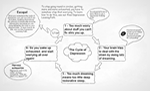
Understand precisely how depression makes you feel so bad, and what you can do to fight back today.


