


Depression and dreaming
Waking up exhausted after many disturbing dreams is a common experience for many depressed people.
It has been shown that depressed people dream up to three times as much as non-depressed people but why should this be? And does this have anything to do with feeling so short of energy first thing in the morning?
The answer is yes, it does, and we know exactly why.
The latest scientific understanding of dreams tells us that we dream for specific biological and psychological purposes.
Emotionally arousing ruminations which are unfulfilled at sleep onset (i.e. the concern is still a worry) get ‘dreamed out’ metaphorically during dreaming. This is done to leave the ‘higher brain’ (neo-cortex) free for dealing with the next day's events.
Dreaming literally takes the ‘charge’ out of a concern. However dreaming is a very distinct part of sleep. It’s called ‘paradoxical sleep’ because it is not the part of sleep which provides us with rest. During the dream phase of sleep (REM), we actually have more of the ‘stress hormones’ such as adrenaline in our systems.
So over-dreaming stresses the system leaving us exhausted when we awaken. If a depressed person is woken every time they show rapid eye movement (which generally coincides with dreaming) then the symptoms of clinical depression can lift. But they may become extremely anxious or manic as the negatively arousing ruminations are still occurring but no longer being ‘flushed out’ by the dream process.
Nature sometimes tries to prevent the person over-dreaming by causing them to awaken in the early hours of the morning so that they spend less time in dream sleep. This is known as early morning waking syndrome.
So why do depressed people dream more?
Depressed people dream more because they have more emotional arousal to ‘dream out.’ Depression causes (and is caused by) a lot of emotionally-arousing introspection, or rumination, that endless sort of worrying that never seems to go anywhere and just makes you feel bad.
The importance of this discovery cannot be overstated. We now know why most of the symptoms of depression occur, and what to do about them.
If you are depressed, there are clear things you must do:
- Learn about depression, so you can stop worrying about that (follow the Depression Learning Path).
- Get some deep relaxation as often as you can to help your system recover from the effects of over-dreaming. (When we use relaxation techniques in our clinic, depressed people will often stay in a deeply relaxed state for up to an hour and a half, often needing to be 'woken up'. This shows clearly a missing need. They regularly report afterwards feeling 'better than they have in months'.
- Do anything that stops you ruminating. This may include seeing a good therapist, who can help you get some perspective on your problems, and recommend a course of action. Depression can make things seem hopeless, in fact convince you of it, when in fact they are not. The help of a trained professional can make all the difference, as long as they use the right approach. You will learn about this on the Depression Learning Path.
Antidepressants have the effect of reducing dreaming, but as a consequence of the reduced REM, the person may then experience more anxiety or agitation. The arousal-dreaming-exhaustion cycle is not properly broken because as soon as drugs are discontinued the person then dreams even more.
Learn more about our step by step guide to overcoming depression »
« Click here to return to the Clinical Depression FAQ.
Take the Depression Learning Path for answers to all of your depression questions.
Depression Faq
- What is Clinical Depression?
- What are the different types of depression?
- Is depression caused by chemical imbalance?
- Am I likely to develop depression?
- Childhood and teenage depression
- What about anti-depressants?
- Is depression hereditary?
- How long does depression last?
- Depression and dreaming
- Which Therapy is Best for Depression?
- The Physical Effects of Depression
- Light Therapy & Depression - particularly SAD
- Why am I depressed if my life is fine?
- Can the way I think lead to clinical depression?
- Are herbal remedies, such as St John's Wort, any good for depression?
- How can I help a friend who is depressed?
- I feel suicidal - what can I do?
- Self Help for Depression - what's the best approach?
- Serotonin - Responsible for Depression?
- Exercise, Meditation and Depression
- Depression and Suicide Help Organizations
- Have you got any translations of the Depression Learning Path?
The Cycle of Depression
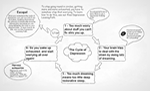
Understand precisely how depression makes you feel so bad, and what you can do to fight back today.


