


Getting Help with Depression
HELP for depression varies wildly in terms of what it considers depression to be, how it treats it and therefore ultimately how effective it is.
The idea that depression can simply be treated as a chemical imbalance is rapidly losing ground. You will know why if you have completed the rest of the Depression Learning Path.
Therefore, the first incredibly important stage of getting help for depression is to understand what depression is. If you have reached this page without completing the rest of the Depression Learning Path, it would be a good idea to go to the start. It will help you get the complete picture.
In summary, we'll give here:
- an indication of the best way to get help with depression
- an assessment of depression help in terms of overcoming depression and preventing relapse
- the common features of successful therapies for depression
- what to look for when seeking help for your depression through therapy
Antidepressants as help for depression
As we have seen on the Learning Path, no one type of depression medication has been shown to be significantly more effective than any other. Antidepressants are also very poor at preventing relapse, and more often than not require a long course of treatment.
Self help for depression
Effective therapy needs to incorporate everything that works in lifting depression. You may be able to help yourself effectively, although often it is useful to get the help of a professional.
Here we'll go through what you can do, as well as what you should look for in any therapy you choose to undergo.
What you can do to help yourself
|
1) Know about your condition - what you know about your depression has been shown to have an effect on well you respond to treatment. Take the Depression Learning Path - it's the best way to start helping yourself. 2) Cut down on rumination Do whatever you can to decrease the amount of rumination you are doing. (Ruminating is 'chewing over' emotional issues in your mind without coming to any decision to act.) If possible, decide to put off difficult decisions for 1 or 2 weeks while you get your energy back. Ways to cut down rumination are to: a) Stop yourself when you spot yourself doing 'all or nothing' thinking. (See thinking styles) The way depression makes us adopt all or nothing thinking is a unique and crucial part of understanding depression. The way depression makes us generate seemingly hopeless outcomes to our situation can make it almost impossible to see a way out of it. Finding ways to gauge your depression can help to show the shades of gray, that will ultimately defeat the black and white thinking on which depression thrives. This is often done in the form of a diary, where you grade how bad your days have been on a scale of 1 to 10, where 1 is the worst and 10 is the best. Then, after 2 weeks or so, you can look back and see how things have varied over that time. 4) Lower your emotional arousal levels calming down emotions such as anxiety and anger helps your brain function more subtly and decreases the amount of catastrophising you do. Along with getting proper rest, being able to relax is incredibly important. Relaxation therapies are effective in overcoming some of the other issues that can co-occur with depression. The effects of panic attacks, anxiety and anger, etc can be lessened and overcome with the ability to relax properly and deeply. Physical disciplines such as Tai Chi, which occupy the mind whilst performing gentle, relaxing exercise can be useful, as can relaxation training such as guided imagery or self hypnosis. 5) Get exercise if you can If you can increase the amount of physical exercise you get, it can be a great self help for depression. The results of the physical exertion will lift your depression temporarily at least, in addition to the other benefits of exercise. (As always, consult your medical practitioner before starting any strenuous exercise regime.) 6) Do What You Enjoy Do what you used to enjoy doing, even if you don't particularly feel like it. Even complete small tasks within the home if you don't feel like meeting other people. Seemingly mundane tasks, if they have an end result, can result in a feeling of satisfaction, and actually increase your serotonin levels! 7) Maintain a regular sleep pattern Do not lie in if you feel exhausted in the morning. All that happens is that you dream a large amount if you sleep through the morning, because your REM periods get longer the longer you have been asleep. Set a time to get up every morning, and get up. Try to spend 8-9 hours in bed, and get up regardless. 8) IMPORTANT! Check that you are meeting your basic emotional needs. More in self help for depression. |
What to look for in a therapist or counselor when getting help with depression
The single, best proven approach for treating depression is a combination of cognitive, behavioral and interpersonal therapy while being brief, solution focused and strategic. If the therapy also includes the understanding of how dreaming figures in depression (which is not yet widely known), it will be even more effective. (You can always point your therapist towards this site. If they are good at what they do, they will be able to incorporate this into their approach quickly.)
(Important note: Therapeutic approaches that increase rumination (going over past hurts and examining what was wrong with past relationships) worsen depression. This includes psychodynamic approaches, gestalt, hypno-analytical and person-centred counseling, plus many others. The evidence for this is now strong enough to stand up in court. (1) )
What does this mean? Well, it's therapy that takes place over a short period of time, usually less (and often much less) than 20 sessions, with significant improvement within 6 sessions. It focuses on:
- the way you think about things
- what you do from day to day
- how you relate to other people
- how your current problems can be tackled to lessen the burden on you (practical problem solving)
- it is aimed at making you feel better, rather than changing your personality
- if you suffer post-traumatic symptoms, removing these quickly before other treatment
While the treatments outlined above do have different approaches there are some key similarities. These are the things you should look for in depression therapy, and your therapist or counselor.
|
The therapeutic, or counseling approach
Check that the therapist or counselor
If you're currently in therapy, you can use this website to test your therapist. |
Next article: Depression Treatment Summary
And now onto the final summary in the Learning Path...
- Dolnick, E. (1998) Madness on the Couch. Simon & Schuster
About the authors


The Depression Recovery Program
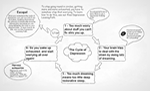
The Cycle of Depression
Understand precisely how depression makes you feel so bad, and what you can do to fight back today.


